Mellon Sawyer Seminar
“Unarchiving Blackness: Why the Primacy of African and African Diaspora Studies Necessitates a Creative Reconsideration of Archives.”
 With a $225,000 grant from the Mellon Foundation, this seminar will explore how the archives of Black life—including documents, drawings, maps, material culture, photographs, and digital content—shape historical narratives of the past, impact the material conditions of African and African Diasporic people in the present, and create imaginative possibilities of vibrant Black life in the future. We explore these questions through a comparative cross-disciplinary exploration of the making of archives, past and present, and the methodological approaches to archives within the humanities. The seminar will “unarchive Blackness” by pulling together scholars whose innovative archival engagements counter the dehumanization, commodification, and ongoing disenfranchisement of African and Black people that saturates traditional archives and upholds colonial legacies of anti-blackness. As a result of this Sawyer Seminar, researchers across the humanities will develop archival practices and ethics that imagine thriving futures for African and Black people.
The faculty leads for the Sawyer Seminar are Ademide Adelusi-Adeluyi (Assistant Professor of History), Jody Benjamin (Assistant Professor of History), andré carrington (Associate Professor of English), Ayana Flewellen (Assistant Professor of Anthropology), and Jade Sasser (Associate Professor of Gender and Sexuality Studies).
Over the course of the year, the Seminar will engage participants to expand our shared conception of which objects, datasets, institutions, and systems might be considered as archives for Black peoples and scholarship. Out of the problems and constraints of existing systems, the Unarchiving Blackness seminar is designed to help participants identify opportunities, envision information caches with which to work, and formulate utopic forward-looking humanities projects based on an expansive view of archives and their capabilities.
The “Unarchiving Blackness” project is supported by a Sawyer Seminar grant from the Mellon Foundation.

Spring 2023 Symposium
May 26 at 9:30am-5:00pm
CHASS Interdisciplinary South 1113 / Zoom
Please join us for the Unarchiving Blackness Symposium on Friday, 5/26 at 9:30am, the final event in the Mellon Sawyer Seminar at UC Riverside on the creative reconsideration of archives in African & African Diaspora Studies.
This free event is IN-PERSON at INTS 1113, with a Zoom option for the audience.
Event Program
⫸ 9:15am – Welcome from the director of the Center for Ideas & Society, Dylan Rodríguez (Media & Cultural Studies/Black Study)
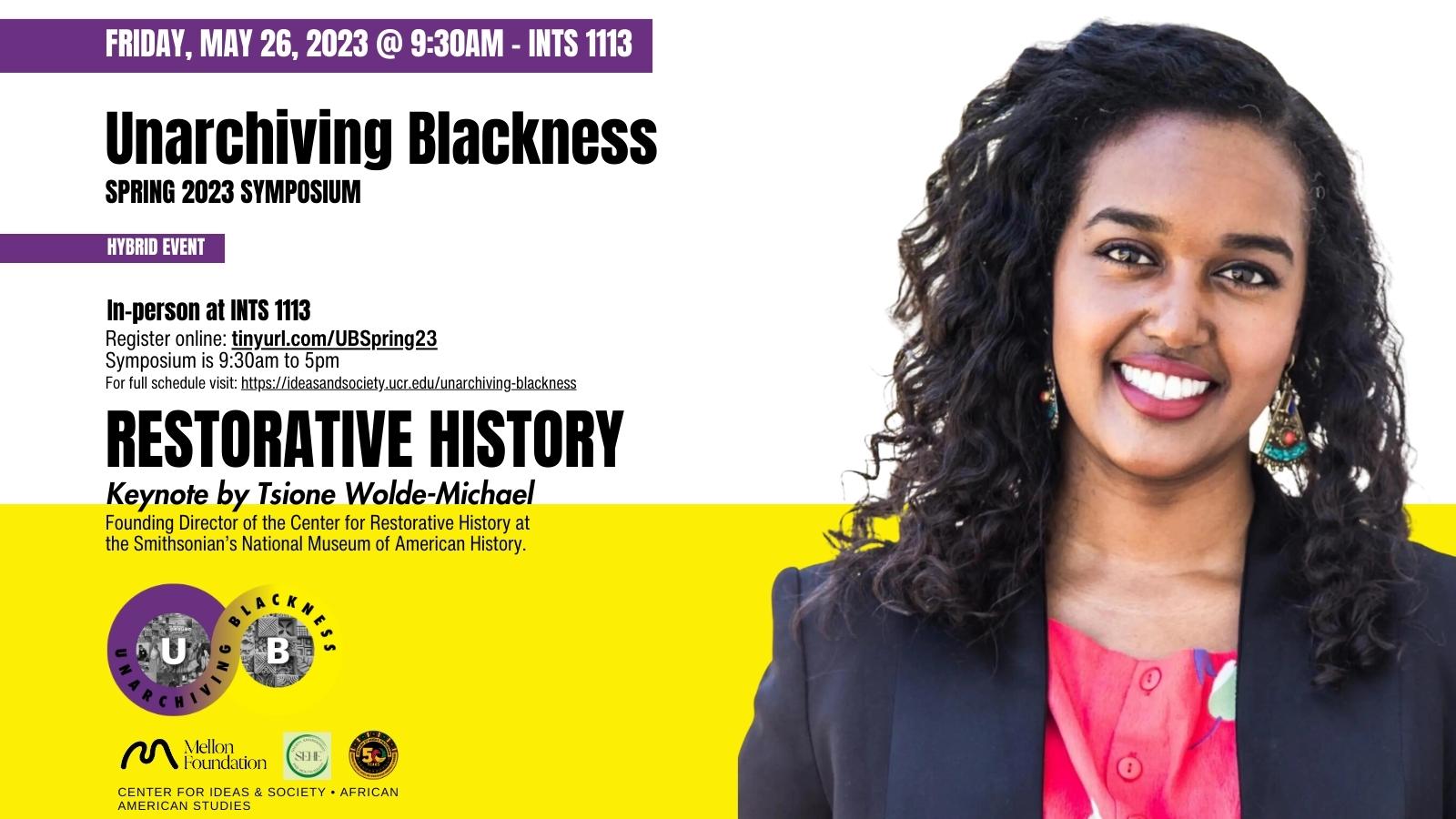
⫸ 9:30am – Restorative History, a Keynote by Tsione Wolde-Michael, Smithsonian National Museum of American History, Bearing Center.
Tsione Wolde-Michael is an arts administrator, historian, and curator. She is the founding director of the Center for Restorative History at the Smithsonian’s National Museum of American History. Her work focuses on redress and restorative justice in museums through innovative approaches to community engagement, collections management, cultural heritage, archival work, and exhibitions. Her international work in Ethiopia, Mozambique, South Africa, and the United Kingdom has focused on collaborating with local art and public history institutions to reinterpret colonial collections. Her shows include the landmark Slavery and Freedom exhibition at the National Museum of African American History and Culture, where she served as inaugural staff. She holds a bachelor’s degree in Women and Gender Studies from Macalester College and her Master’s in History from Harvard University.
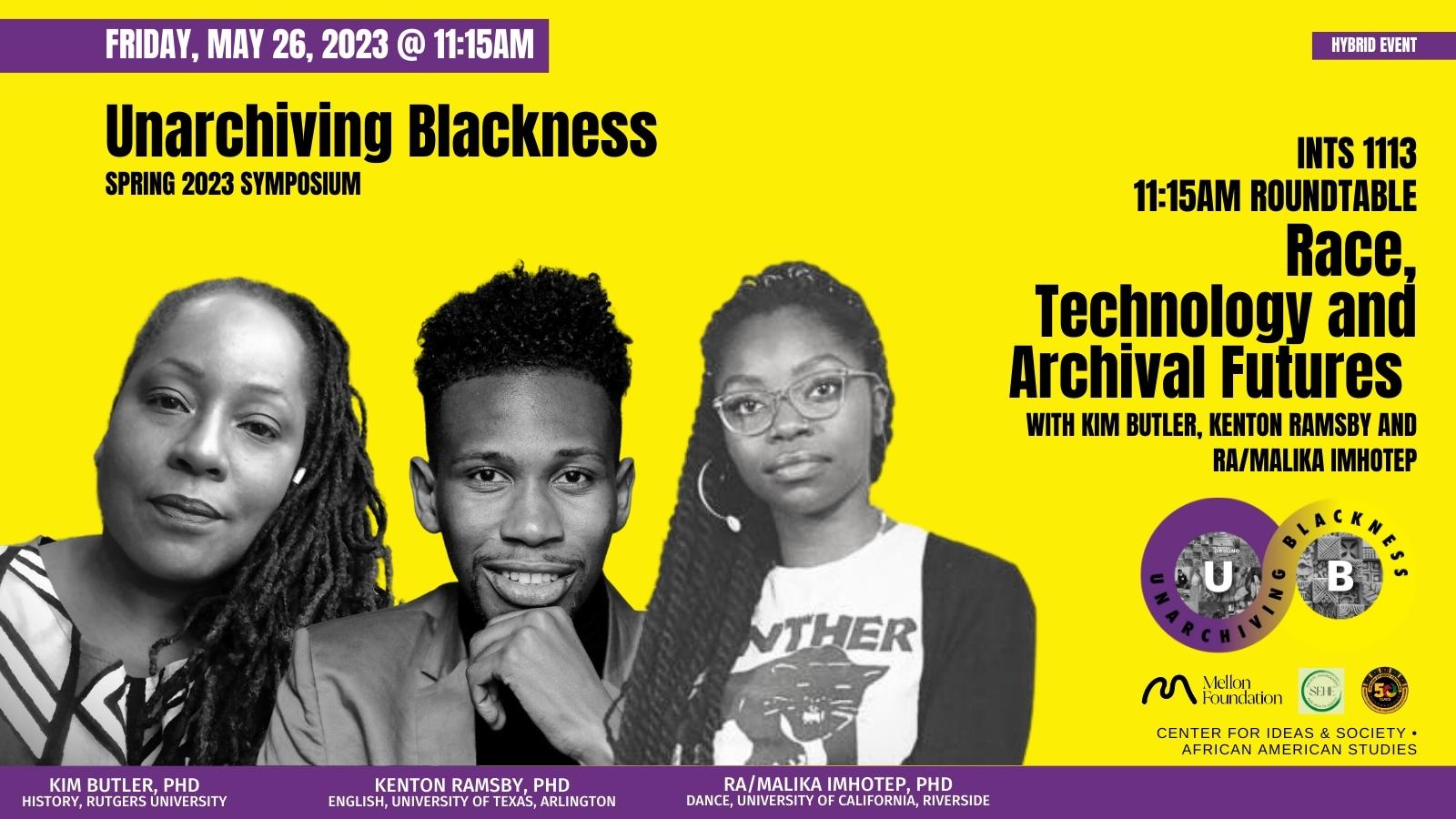
⫸ 11:15am – Roundtable on Race, Technology, and Archival Futures
Kim Butler (Rutgers University)
Kenton Ramsby (University of Texas)
Ra Malika Imhotep (UC Berkeley)
⫸ Lunch on campus
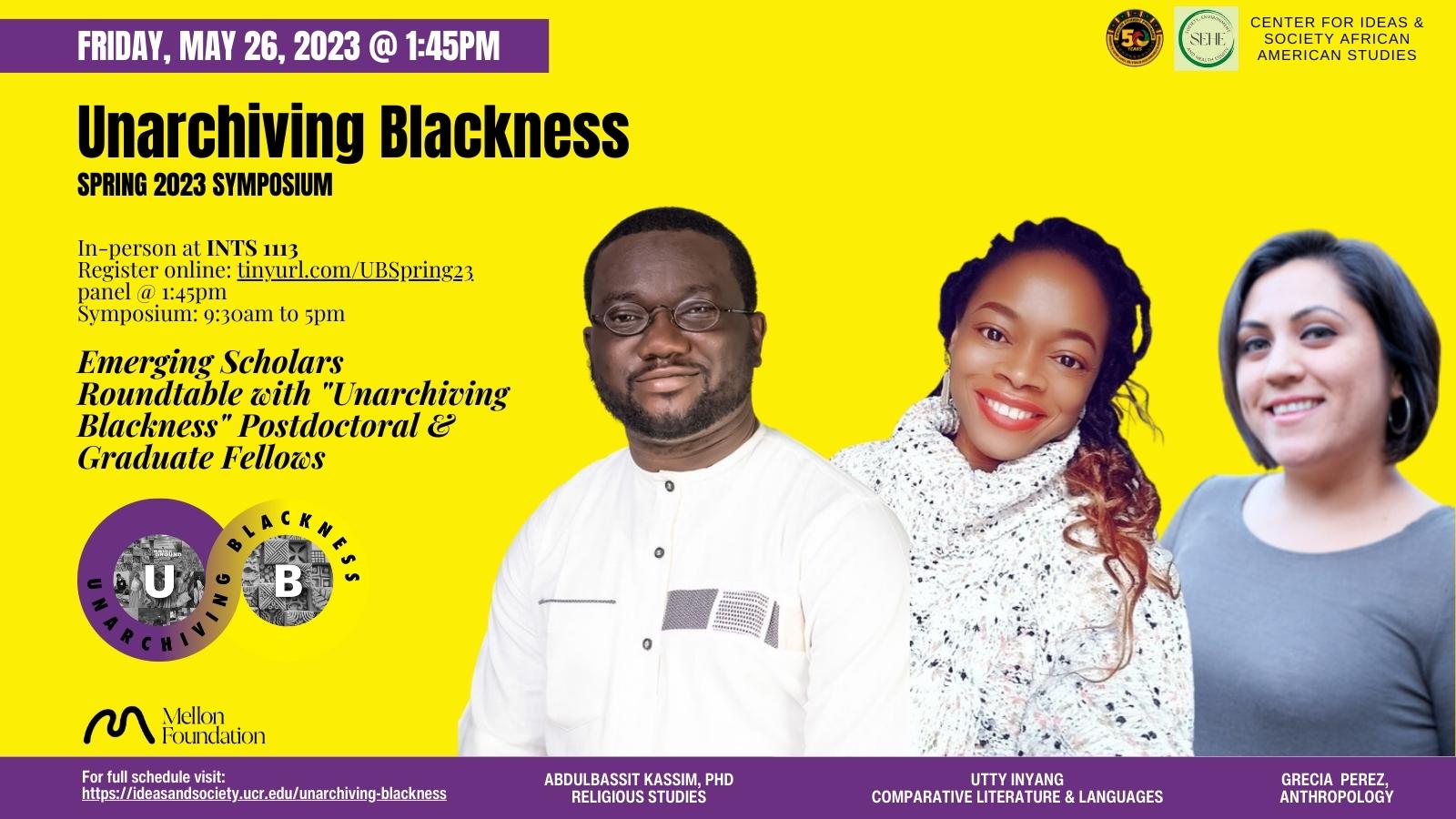
⫸ 1:45pm – Emerging Scholarship Panel
Abdulbasit Kassim (Religious Studies, Unarchiving Blackness postdoctoral fellow) on ecologies of knowledge in non-Europhone African archives
Utitofon Inyang (Comparative Literature, graduate student fellow) on de/fragmentation in African & Diaspora Art & Literature
Grecia Perez (Anthropology, graduate student fellow) on water as an archive in Indigenous and Afro-Mexican communities of Oaxaca
⫸ 3:15pm – Reflections from the Seminar Faculty
Ademide Adelusi-Adeluyi (UCR, History)
Jody Benjamin (UCR, History)
andré carrington (UCR, English)
Ayana Flewellen (Stanford University, Anthropology)
Jade Sasser (UCR, Gender & Sexuality Studies)
⫸ Followed by a closing performance and catered reception
The Unarchiving Blackness Sawyer Seminar is funded by a grant from the Mellon Foundation and administered through the Center for Ideas and Society. For more information, follow @unrchvngblcknss on Instagram and Twitter.
Themes
The Afterlives of Slavery and Colonialism
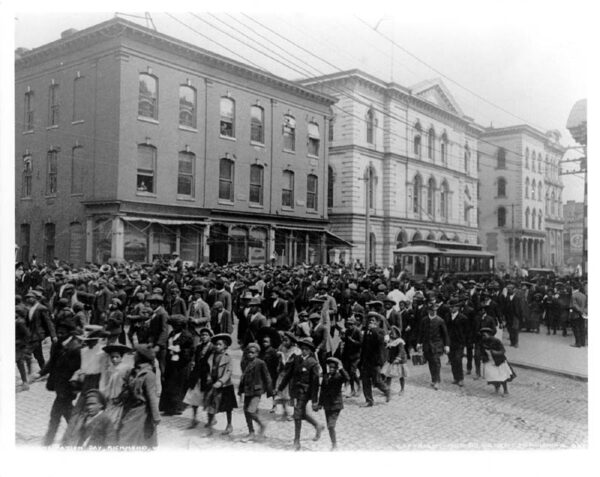
Emancipation Day, Richmond VA, 1905. Copyright by Detroit Publishing Company.
Scholarship on slavery and colonialism is often divided conceptually, following a regional chasm that emerged in the academy between Africanist and Black Studies scholars since at least the 1970s. Atlantic slavery is often posited as the key explanatory event for Black Studies, while for Africanists, the era of European colonialism occupies an analogous place as the precipating event for many interpretive studies. Nevertheless, whatever their regional or temporal focus, scholars working on aspects of African and African-descended populations face similar problems with respect to the problems of the archive, archival legacies for racialized and marginalized populations and of archival practice as method. The research topics and events in this theme encourage participants to place research questions into a more comparative perspective, and to learn from parallel debates unfolding in discrete regions.
Black Ecologies and Placemaking
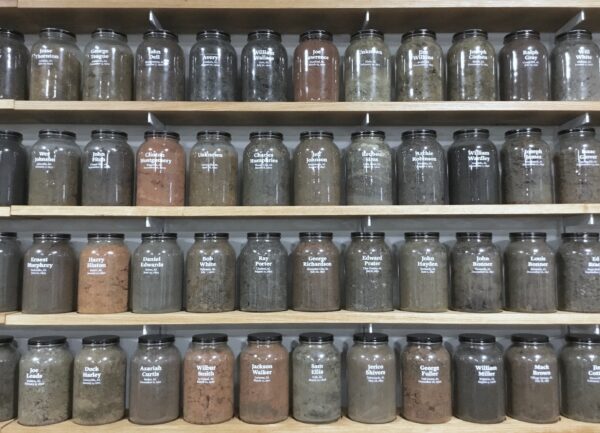
Soil archives at National Museum of Peace and Justice, Montgomery, AL.
Here we take up the conceptualization of the ground—from the soil to the atmosphere—as an archive of past and present African and African diaspora lived experiences, as well as a portal to future possibilities. Taking cues from the Legacy Museum’s use of soil collected from lynching sites across America to memorialize the tragic lynching of Americans of African descent, this theme is grounded in the present by taking up questions on food geographies, the ecology of slavery, the meanings, uses, and the (re) circulations of bio-masses as productive spaces. We will explore knowledge producing and storing technologies related to place, such as Geographic Information Systems (GIS), and how digital humanities can build cartographic narratives and other ways of knowing.
Technology, Afrofuturism, and Black Speculative Practices
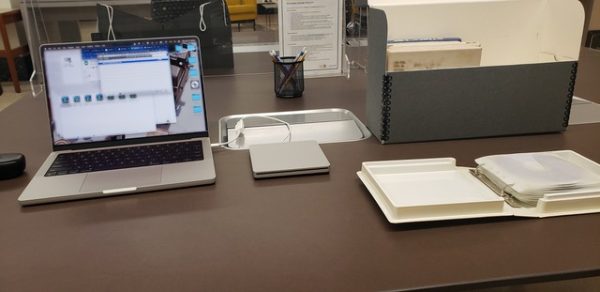
This theme is concerned with the ways futures are envisioned and made, and the roles of technology, digital humanities, and archival systems for Black peoples in the future. We first examine how digital archives of Black lives are created and accessed intentionally and unintentionally, with and without consent. We investigate the problems and ethics of digital humanities archives, while also celebrating their creative and world-building potentials. Here we will link to Afrofuturism and black speculative practices as models for productive engagement with systems of archive and memory, temporality, and future-casting.
Personnel
Dr. Ademide Adelusi-Adeluyi
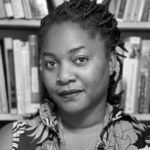 Trained as both historian and computer engineer, Dr. Adelusi-Adeluyi’s research into the history of African cities combines a set of interdisciplinary interests in African and urban history, technology, cartography and spatial humanities. She joined UCR’s History department as an Assistant Professor in July 2015 and received her PhD in History from NYU in 2016. Her current book project, “Imagine Lagos: Speculative Maps and the Making of a Nineteenth Century West African City,” is a spatial history of Lagos between 1845 and 1868, one that takes into account the city’s role as the economic, political and cultural focal point of the Bight of Benin.
Dr. Jody Benjamin
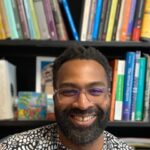 Jody Benjamin is a historian of 18th and 19th century Western Africa, where his research focuses on social and cultural history through the lens of of material culture, consumption, and dress. His work in Senegal, Mali and Guinea charts the region’s integration into a global economy dominated by capitalist networks and colonial logics.
Trained as a historian in the Department of African and African American Studies at Harvard, Dr. Benjamin’s work has been supported by the National Endowment for the Humanities (NEH), the University of California Regents, University of California Humanities Research Initiative (UCHRI), the Hellman Fellows Fund, and the John Carter Brown Library at Brown University. He is the lead project investigator for “Unarchiving Blackness,” a 2022-2023 Mellon Sawyer Seminar on archival practices in African and African Diaspora Studies.
He is also a 2022 co-Convenor of the Humanities Across Borders “Textiles and Dyes as Transnational, Global Knowledge,” an international graduate school at Leiden University, the Netherlands. Dr. Benjamin has published chapters in two edited volumes, Dressing Global Bodies: the Political Power of Dress in World History (Routledge, 2019) and in Creating African Fashion Histories: Politics, Museums and Sartorial Practices (Indiana University Press, 2022). His research monograph, The Texture of Change: Dress, Pluralism and History in Western Africa, 1700-1850, is under contract with Ohio University Press New African History Series. He is Assistant Professor of History at the University of California, Riverside, where he teaches classes on Africa and African Diasporas.
Dr. andré carrington
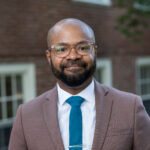 Dr. carrington is Associate Professor of English at UC Riverside. He is a scholar of race, gender, and genre in Black and American cultural production. His first book, “Speculative Blackness: The Future of Race in Science Fiction,” interrogates the cultural politics of race in the fantastic genres through studies of science fiction fanzines, comics, film and television, and other speculative fiction texts. He is a past recipient of fellowships from the Radcliffe Institute for Advanced Study at Harvard University and the Penn Humanities Forum at the University of Pennsylvania (now the Wolf Center for Humanities).
Dr. Ayana Flewellen
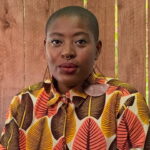 Dr. Flewellen is a Black Feminist, an archaeologist, a storyteller, an artist scholar, and an Assistant Professor in the Department of Anthropology at UC Riverside. As a scholar of anthropology and African and African Diaspora Studies, Flewellen’s intellectual genealogy is shaped by critical theory rooted in Black feminist epistemology and pedagogy. This epistemological backdrop not only constructs the way she designs, conducts and produces her scholarship but acts as foundational to how she advocates for greater diversity within the field of archaeology and within the broader scope of academia. Flewellen is the co-founder and current President of the Society of Black Archaeologists and sits on the Board of Diving With A Purpose.
Dr. Jade Sasser
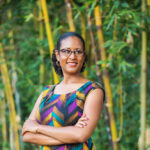 Dr. Sasser Dr. Jade S. Sasser is an Associate Professor in the Department of Gender & Sexuality Studies at UC Riverside. Her work explores how environmental problems such as climate change and toxic exposures intersect with race and gender—specifically, the bodies, health, rights, and reproductive justice of women of color. Her first book, On Infertile Ground: Population Control and Women’s Rights in the Era of Climate Change, was published in 2018 by NYU Press, and received the Emory Elliott book award. Currently Dr. Sasser has two ongoing research projects: one focusing on gender, cookstoves, and household energy use in Africa and Asia; and the other, exploring how racial inequality shapes climate change-related emotions, reproductive plans, and visions of the future.
Utitofon Inyang
 Utitofon Inyang is a Doctoral Candidate in the Department of Comparative Literature. She is a member of the African Studies Association Emerging Scholars Network Executive Committee and the Vice-Chair of the African Literature Association Graduate Student Caucus.
Utitofon holds a B.A. (English) from University of Uyo (Nigeria), and an M.A.(Literature-in-English) from University of Ilorin (Nigeria). Her research interests intersect 20th Century to present day West African Anglophone literature and culture, Critical Theory, Global Anglophone Literatures, and Digital Humanities.
Her dissertation, “Like a Mask Dancing: Visuospatial Geographies in West African Anglophone Literature” uses a specific instance of West African indigenous culture –masquerade performance – as a critical framework to examine questions of space and subjectivity, epistemology, and cultural ecologies in the works of contemporary African and Afro-diasporic writers like Chinua Achebe, Wole Soyinka, Teju Cole, and Chimamanda Adichie. This study draws insights from multiple disciplines to arrive at a reading methodology – visuospatiality – that attends to the textual atlas of black lifeworlds, showing how writers distill visual and spatial networks from indigenous African thought into literary form. Overall, Utitofon’s work takes into serious account the worlding practices that underpin African literary archives and makes the case for centering African geographies, cultures, and subjectivities as the theoretical basis for reading African literature.
Grecia Perez
 This project centers the (il)legibility of the Black experience in the Costa Chica region of the Mexican Pacific Coast, by looking at the limits and opportunities to development and environmental impacts that Afro-descendants are experiencing. Previous and current ethnographic fieldwork have demonstrated that social movements defending natural resources in Mexico are not available as a strategy to Afro-Mexicans as it may be available to mestizos or indigenous groups. I focus on what are the limits and opportunities available to the people who live in Black villages and propose understanding nearby waterscapes (river, lagoons, and the ocean) as an archive. This archive intends to understand multiple narratives that circle back and center narratives of Black life in relation to national and global discourses of conservation, development, and human rights. My dissertation will highlight where boundaries are drawn by different factors and how such boundaries can unveil what seems murky, unclear, and incomplete in Mexico.
Abdulbasit Kassim
 I am an interdisciplinary historian of West Africa and the African Diaspora with a focus on Islam and Muslim societies from the seventeenth century to the present. My research investigates questions about continuities, discontinuities, ruptures, and changes in the history of ideas that have fundamentally shaped past and present societies and peoples across time and space in their varied and situated cultural, social, political, economic, and material histories, placing Africa at the center of the narrative. In my research, I trace the ebbs and flows of African ideas on slavery, colonialism, religion, power, knowledge, empire, nation, state, race, ethnicity, citizenship, warfare, gender, and sexuality. I am currently working on my first single-authored book tentatively entitled Old Reformers, New Dissidents: Continuity and Change in the Intellectual History of Jihad and Traditions of Reform in Muslim West Africa. This book examines the continuities and changes in the longue durée of successive waves of Islamic reform, counter-reform, dissidence, rebellion, and jihad in Muslim West Africa. I received my PhD at Rice University. Prior to my PhD, I was a Predoctoral Fellow at the Institute for the Study of Islamic Thought in Africa and the Program of African Studies at Northwestern University.
Events
Recordings
Job & Fellowship Postings
Postdoctoral Scholar for the “Unarchiving Blackness” Mellon Sawyer Seminar
The Center for Ideas and Society at the University of California, Riverside
–The University of California, Riverside, invites applications for a one-year Postdoctoral Scholar to support an Andrew W. Mellon Foundation Sawyer Seminar entitled “Unarchiving Blackness: Why the Primacy of African and African Diaspora Studies Necessitates a Creative Reconsideration of Archives” scheduled for the 2022-23 academic year.
 The Center for Ideas and Society is an interdisciplinary and transdisciplinary center for academic research, dedicated to advancing humanistic studies, intellectual exchange, and creativity at UC Riverside. The Seminar working group for Unarchiving Blackness will be led by Professors Jody Benjamin (History), Ademide Adelusi-Adeluyi (History), Ayana Omilade Flewellen (Anthropology), Jade S. Sasser (Gender & Sexuality Studies), and andré carrington (English). In collaboration with the Postdoctoral Scholar, the seminar conveners will facilitate research workshops, public lectures, artist talks, a symposium, and other events exploring how archives of Black life—including documents, drawings, maps, material culture, photographs, and digital content —shape historical narratives of the past, impact the material conditions of African and African Diasporic people in the present, and create imaginative possibilities of vibrant Black life for the future. Thinking across disciplinary, geographic, and temporal boundaries, the Unarchiving Blackness Mellon Sawyer Seminar will explore alternative methodological engagements with archival materials that push against the silenced, erased, and inhuman contortions of Black life in the past by conceiving of archival futurity that illuminates the expansiveness of Blackness on the continent of Africa, in North America, and in the Caribbean. Three major themes structure the Seminar: The Afterlives of Slavery and Colonialism (Fall 2022), Black Ecologies and Placemaking (Winter 2023), and Technology, Afrofuturism, and Black Speculative Practices (Spring 2023). Over the course of the year, the Seminar will engage participants to expand our shared conception of which objects, datasets, institutions, and systems might be considered as archives for Black peoples and scholarship.
The Mellon Sawyer Postdoctoral Scholar is a 12-month appointment from September 1, 2022 to August 31, 2023 and includes stipend, health benefits, and logistical assistance with relocation. The fellow is expected to be in residence at UC Riverside and will be hosted, with office space and administrative support, by the Center for Ideas & Society. A faculty mentor from the Seminar leadership team will advise the Postdoctoral Scholar during their appointment. The range of duties for the successful candidate will include:
- conducting research whose questions or methods relate to the seminar’s overall theme, “Creative Reconsideration of Archives in African and African Diaspora Studies
- engaging, as an active discussion participant and interlocutor, in seminar workshops, public-facing events, and related activities during the 2022-23 academic year
- communicating with invited speakers and guests
- participating in research paper workshops with graduate students and seminar faculty throughout the academic year
- delivering a public lecture/presentation based on written, visual, or performance work in progress.
Qualifications:
- Candidates will have a recent* Ph.D. in History, Anthropology, Archeology, Women and Gender Studies, English, Comparative Literature, or a comparable field with specialization in African and African Diaspora Studies. (*awarded within the previous 5 years)
- UCR is a world-class research university with an exceptionally diverse undergraduate student body. Its mission is explicitly linked to providing routes to educational success for underrepresented and first-generation college students. A commitment to this mission is a preferred qualification.
- Demonstrated scholarly expertise in the study of peoples of African descent, the African continent, the Caribbean, the Americas, or the Black Diaspora
Application Procedure:
Applicants will be required to submit a cover letter, CV, sample of research work, a statement of research interests, Statement of Past and/or Planned Future Contributions to Advancing Diversity and Inclusive Excellence, and contact information for three professional references.
Applications and materials will be submitted using UCR’s online application system located at https://aprecruit.ucr.edu/JPF01530
Applicants who use Interfolio may utilize a feature provided by the Interfolio Service to allow Interfolio to upload their letters directly into AP Recruit. Applicants can input an Interfoliogenerated email address in place of their letter writer’s email address. Interfolio refers to this as Online Application Deliveries. The following link on the Interfolio website shows how to set this up (http://help.interfolio.com/entries/24062742-Uploading-Letters-to-an-Online-ApplicationSystem).
To ensure full consideration, applications and supporting material should be received by Tuesday, April 5, 2022.
Post-doc salary will be $54,540-$65,292 depending on experience upon start.
UCR is a world-class research university with an exceptionally diverse undergraduate student body. Its mission is explicitly linked to providing routes to educational success for underrepresented and first-generation college students. A commitment to this mission is a preferred qualification.
The University of California is an Equal Opportunity/Affirmative Action Employer. All qualified candidates will receive consideration for employment without regard to race, color, religion, sex, sexual orientation, gender identity, national origin, age, disability, protected veteran status, or any other characteristic protected by law.
University of California COVID-19 Vaccination Program Policy
As a condition of employment, you will be required to comply with the University of California SARS-CoV-2 (COVID-19) Vaccination Program Policy. All Covered Individuals under the policy must provide proof of Full Vaccination or, if applicable, submit a request for Exception (based on Medical Exemption, Disability, and/or Religious Objection) or Deferral (based on pregnancy) no later than the applicable deadline. New University of California employees must (a) provide proof of receiving at least one dose of a COVID-19 Vaccine no later than 14 calendar days after their first date of employment and provide proof of Full Vaccination no later than eight weeks after their first date of employment; or (b) if applicable, submit a request for Exception or Deferral no later than 14 calendar days after their first date of employment. Federal, state, or local public health directives may impose additional requirements.