Faculty Research Collaboratives and Projects
Conferences sponsored by the Center for Ideas and Society
Programs
–
Community Conversations
 Academic Book Club awards cover the purchase of books for virtual groups of faculty and/or graduate students who agree to meet up online to discuss sections of the book at least 3 times over the coming quarter. Though we ask that at least half the participants be CHASS faculty and/or graduate students, conveners and other club members may be from any school or college at UCR.
Club leaders convene meetings via Zoom or other online meeting room services. Selected titles should have the potential to engage multiple perspectives, disciplines and methods in critical inquiry. Inclusive, cross-disciplinary groups are encouraged. At the end of the quarter, groups will be asked to provide feedback on their experiences.
2026 Summer Book Clubs:
Isoke Atiba, convener – “The Typographic Imagination: Reading and Writing in Japan’s Age of Modern Print Media”
Tommy Kegler, convener – “The Labors of Resurrection: Black Women, Necromancy, and Morrisonian Democracy”
Qinyi Luo, convener – “Leibniz: New Essays on Human Understanding”
Daniel Majerowicz, convener – “The Ancient House: Constructing Community in the Seventeenth-Century New York Borderlands”
Mafe Rangel, convener – “The Moral Psychology of Admiration”
Natalie Saffie, convener – “Plurilingual Education in a Monolingualised Nation: Exploring New Frontiers in Language Teaching in Japan”
Rachel Wu, convener – “Crying in H Mart: A Memoir”
Research and Publication
 Research Writing Groups encourage sustained writing practices, productivity and networking through regularly scheduled writing sessions.
Writing Group awards provide $25 gift cards to participants who attend a majority of scheduled meetings. Groups of 4-8 participants agree to meet at least five times over the quarter. Though we ask that at least half the participants be CHASS faculty and/or graduate students, conveners and other group members may be from any school or college at UCR. Group leaders convene meetings via Zoom or other online meeting room services. At the end of the quarter, groups will be asked to provide feedback on their experiences.
Summer 2026 Groups
Mariam Nadirashvili, convener – 4 members
Jorge Nicolás Leal, convener – 6 members
Claudia Holguin Mendoza, convener – 5 members
Rachel Wu, convener – 11 members
Wenxin Tang, convener – 4 members
Baylee Musie, convener – 6 members
Megan Richardson, convener – 11 members
Liz Przybylski, convener – 5 members
Mafe Rangel, convener – 5 members
Jasmin Salgado, convener – 10 members

Project Development Awards provide funds to help CHASS faculty members substantially move a project (book manuscript, film, play or substantial creative project) toward completion and submission/production (to a press, film festival, theatre, gallery show, etc.) by creating opportunities to receive input and feedback on works-in-progress.
Proposals may include meetings with scholars or subject matter experts for an open discussion of the faculty member’s work, meetings with community partners, workshops, experimental productions, and other collaborative formats for soliciting feedback on a project. Special consideration will be given to projects that have potential to impact tenure and/or promotion. Applicants must clearly identify how the proposal supports the planned completion or production of the next stage of their project.
2025-26 Participants
Samuel Lamontagne (Music) “Leave It For the Children: A Visual History of the Pan Afrikan Peoples Arkestra”
Robin Russin (Theatre, Film, & Digital Production) “Untitled, historical novel” (in development)
Cecilia Vasquez (Anthropology) “Sanctuary Under Siege: Meaning and Future of Sanctuary in the Inland Empire” (in development)
2024-25 Participants
Liz Przybylski (Music) “Creativity and Constraint: Gendered Experiences of Working Artists in the Belgian Popular Music Mainstream” (in development)
Elizabeth Rubio (Gender and Sexuality Studies) “Dreams Beyond Recognition: The Queer Temporality of Asian American Immigrant Justice Activism” (in development)
Amy Skjerseth (Music) “Preprogrammed: How Electronic Presets Changed Music and Media”
2023-24 Participants
Chikako Takeshita (Gender & Sexuality Studies) “Radioactive Speak: The Science and Politics of Radiation Exposure in Fukushima” (in development)
2020-21 Participants
Farah Godrej (Political Science) “Prison Yoga and Meditation: South Asian Text and Practice in the US Carceral System”
Anthony Jerry (Anthropology) “Chasing Blackness: Racial Economies and the Production of Citizenship in Mexico” (in development)
Richard Rodriguez (Media & Cultural Studies) “Undocumented Desires: Fantasies of Latino Male Sexuality” (in development)
Michele Salzman (History) “The ‘Falls’ of Rome: Transformations of the City in Late Antiquity (270-603 CE)”
Dana Simmons (History) “Hungry, Thinking with Animals” (Funded by a a grant from the University of California Office of the President Multi-campus Research Programs and Initiative Funding through the UC Humanities Research Institute.)
Victoria Reyes (Sociology) “Academic Outsider”
Annika Speer (Theatre, Film & Digital Production) “Missing: A Musical Dramedy”
Bronwyn Leebaw (Political Science) “After Slumber: Transformative Justice, Memories of Resistance, and the Lessons of the Past” (in development)
Helpful Resources
Faculty Book Workshop Guide by CISSR
Workshop Planning Guide by Matthew Salganick
How to Plan a Book Manuscript Workshop by Karen Tani
Recently revised to widen eligibility and expand project types, the CHASS Research Forum aims to raise the profile of CHASS research and creative projects.
Research Announcements
Share links and announcements of your new publications, exhibits, grant reports, or other milestones and we will post the information on our CHASS email newsletter and social media channels to bring help attention to your work.
Project or publication “launch” events
Launch events host authors, creatives, and scholars in a “deep dive” conversation into the scholarly process and research behind the project or publication. Suitable for new publications, grant projects, project outcomes and similar research milestones.
For more information: Katharine.henshaw@ucr.edu
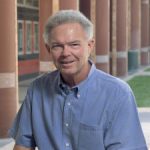 Made possible by gifts from Emory’s family and friends, the Emory Elliott Book Award honors the book published by a CHASS faculty member during the previous academic year that, in the judgment of the selection committee, best exemplifies the values that characterized Professor Elliott and his contributions to life and letters.
Among these many contributions are the capacity to recognize complexity together with the passion to clarify, the ability to contribute to a conversation rather than to summarize agreements already established, and the intent to further a tradition of creative and scholarly munificence.
Award Winners
- 2025: Dana Simmons (SEHE) – On Hunger: Violence and Craving in America, from Starvation to Ozempic
Finalists: Allison Benis White (Creative Writing) – A Magnificent Loneliness
Emily Hue (Ethnic Studies) – Performing Vulnerability: Risking Art and Life in the Burmese Diaspora -
2024: Randol Contreras (Media & Cultural Studies) – The Marvelous Ones: Drugs, Gang Violence, and the Resistance in East Los Angeles
Finalists: Imani Kai Johnson (Dance) – Dark Matter in Breaking Cyphers: The Life of Africanist Aesthetics in Global Hip Hop
Liz Przybylski (Music) – Sonic Sovereignty: Hip Hop, Indigeneity, and Shifting Popular Music Mainstreams -
2023: Alejandra Dubcovsky (History) – Talking Back: Native Women and the Making of the Early SouthFinalists: Philipp Lehmann (History) – Desert Edens: Colonial Climate Engineering in the Age of Anxiety and Jennifer Syvertsen (Anthropology) – Dangerous Love: Sex Work, Drug Use, and the Pursuit of Intimacy in Tijuana, Mexico
- 2022: Allison Hedge Coke (Creative Writing) – Look at This Blue
Sherryl Vint (English) – Biopolitical Futures in Twenty-First-Century Speculative Fiction
- 2021: Anusha Kedhar (Dance) – Flexible Bodies: British South Asian Dancers in an Age of Neoliberalism
Brandon Robinson (Gender and Sexuality Studies) – Coming Out to the Streets
- 2020: Victoria Reyes (Sociology) – Global Borderlands: Fantasy, Violence and Empire in Subic Bay, Philippines
- 2019: Jade Sasser (Gender & Sexuality Studies) – On Infertile Ground: Population Control and Women’s Rights in the Era of Climate Change
Steven Brint (Sociology) – Two Cheers for Higher Education: Why American Universities Are Stronger Than Ever―and How to Meet the Challenges They Face - 2018: Sang-Hee Lee (Anthropology) – Close Encounters with Humankind: A Paleoanthropologist Investigates Our Evolving Species
- 2017: Charmaine Craig (Creative Writing) – Miss Burma
- 2016: Anthea Kraut (Dance) – Choreographing Copyright: Race Gender, and Intellectual Property Rights in American Dance
- 2015: Conrad Rudolph (Art History) – The Mystic Ark: Hugh of Saint Victor, Art, and Thought in the Twelfth Century
- 2014: Amanda J. Lucia (Religious Studies) – Reflections of Amma: Devotees in a Global Embrace
- 2013: Maudemarie Clark (Philosophy) – The Soul of Nietzsche’s Beyond Good and Evil
Perry Link (Comparative Literature) – An Anatomy of Chinese: Rhythm, Metaphor, Politics - 2012: Priya Srinivasan (Dance) – Sweating Saris: Indian Dance as Transnational Labor
- 2011: Michelle Raheja (English) – Reservation Reelism: Redfacing, Visual Sovereignty, and Representations of Native Americans in Film
Student Research
Graduate student fellows in this program receive support for summer writing projects and the opportunity to connect with other UC graduate fellows in virtual meetings and workshops. The fellowships are funded through a collaborative grant from the UC Humanities Consortium.
2026 Fellows
Maisam Haider Ali (Comparative Literature and Languages)
Soofia Lateef (Philosophy)
Jovana Isevski (English)
2025 Fellows
Othandwayo Mgqoboka (Anthropology)
Iliana Cuellar (Comparative Literature and Languages)
Allan Zheng (Music)
Sean Keenan (History)
2024 Fellows
Iliana Cuellar, Comparative Literature, Palimpsexts: Autotheory as Worldmaking in Feminist Film and Video
Sean Keenan, History, The Haiphong – Kunming Railroad: The Spaces Between
Othandwayo Mgqoboka, Anthropology, Ways of Dying: Antiblackness, Democracy and the Question of (un)Freedom in South Africa
Allan Zheng, Music, Following The Way: Creativity and the Cosmopolitan in Contemporary Cambodian Performance
2023 Fellows
Nicole Furtado, English, Galaxies like Islands, Islands like Galaxies: Envisioning Futurity in Seascape Technologies
Rotem Herrmann, Philosophy, Body and Memory: An Inquiry into Skill
2022 Fellows
Jeff Chu, History, Thracians among Others: Encounters with Greeks, Macedonians, and the Near East
Xiomara Forbez, Dance, Prima, ‘Olapa, Bachatera – Name Me Dancer: Expanding the Category of Dancer through Ballet, Hula, and Bachata
Deborah Nelson, Philosophy, The Reasoning of Economically-Disadvantaged People
Nattapol Wisuttipat, Music, Spicy: The (Un)making of Queer Presence in Thai Classical Music
2021 Fellows
Stephanie DeMora, Politcal Science, Who Supports Her? The Conditions of Gender Specific Voting
Grecia Perez, Anthropology
Evelyn Pruneda, Sociology, Navigating Multidimensional Borderlands: How Spatial Politics and Inequalities Shape the Working Conditions and Lived Experiences of Women Farmworkers in Rural California
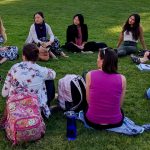 The Humanities Graduate Student Research Grants assist CHASS graduate students involved in original research or creative projects in the humanities. Awarded funds are primarily intended for research proposals related to dissertation or MFA work, though other projects are considered as funds permit.
The award process is competitive. Applications are collected each fall and announced the following spring. Projects are judged according to intellectual merit, faculty support and justification for the proposal as it relates to completion of the dissertation or MFA project.
The Humanities GSR Awards are sponsored by UCR Graduate Division, the College of Humanities, Arts, and Social Sciences, and the Center for Ideas and Society.
We congratulate the following award winners!
| 2026-27 Winners | 2025-26 Winners |
|---|---|
|
Esther Aguayo (Anthropology)
Elizabeth DeWolf (Creative Writing)
Mara De Gregori (Anthropology)
Rory Fewer (Music)
Nico Valdivia Hennig (Hispanic Studies)
Ariel Texis Muñoz (Anthropology)
Cal Plett (Music)
Brenda Rincon (Psychology)
Derly Johanna Nieto Rojas (Hispanic Studies)
Justin Tran (Anthropology)
Jenna M Wilson (English)
|
Paula Cucurella (Hispanic Studies Department) Charlotte Biggs (History) Sammitha Sreevathsa (Department of Dance Studies) Jieun Lee (Department of Political Science) Nicolas Valdivia Hennig (Spanish) Sarah Grace Faulk (Art History) Thomas Kegler (Political Science) Sophia Rodriguez (Anthropology) Ashley Shults (Anthropology) Julia Torres (History) Minhye Joo (Political Science) Jose Alvarez (Anthropology) Miriam Villazón Valbuena (Hispanic Studies Department) Yiwang Li (School of Education) Rodrigo Arenas (Dance) Zite Ezeh (CWPA) Andrés Misnaza (Hispanic Studies Department) Catherine Wells (Political Science) Rory Fewer (Music) Eloy Neira de la Cadena (Music) Anais Martinez (Psychology) Maria Aldana Mendoza (Hispanic Studies) |
Made possible by her children, one of whom is the third director of CIS, this fund provides support for graduate students seeking travel and dissertation support from the Center for Ideas and Society within the majors of History, Art History, and Political Science in the hope that it will help them realize their ambitions and make a contribution through their research to the world of ideas.
Jean Rowe Warnke raised five children in Washington, D.C. during the Post-WWII era and instilled in them, by word and steely example, a commitment to truth, progressive values and generosity of spirit, along with an aversion to anything that smacked of self-promotion, resting on one’s laurels or conceit. She pushed them, and herself, to make a difference, and she committed her formidable energies to bettering the lives of those less fortunate.
The 2019-20 award recipient was Camilla Querin (History of Art) for the project: Dialectics of Malandragem, When Arts Transform the Outcast into a Hero.
Award Recipients
2026-27: Christella Maldonado (History)
2025-26: Sarah Grace Faulk (History of Art)
2024-25: Ashley McNelis (History of Art)
2022-23: Eun-A Park (Political Science)
2021-22: Molly Bond (History of Art)
2020-21: John Haberstroh (History)
2019-20: Camilla Querin (History of Art)
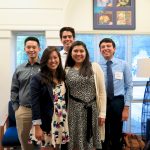 The Mellon Mays Undergraduate Fellowship (MMUF) is a two-year program that provides financial support, research mentorship, and assistance with graduate school applications. The Mellon Mays program at UC Riverside is administered by the Center for Ideas and Society and is funded by an annual grant from The Andrew W. Mellon Foundation. The program is managed by the Center Director (PI) and the CHASS Dean (Co-PI.) Visit UCR’s MMUF website for more information on student eligibility and benefits: mellonmays.ucr.edu
Faculty Program Coordinator: Covadonga Lamar Prieto (Professor, Hispanic Studies; Associate Dean, College of Humanities, Arts and Social Sciences)
Administrative Program Coordinator: Katharine Henshaw (Executive Director, Center for Ideas and Society)