-
Being Human
-
AI/Being Human
-
War and Politics in the 21st Century
-
Connecting Colleges
-
Desert Spotlight
-
Post-Pandemic Futures
Ways Forward
-
Big Questions!
Controversial Topics / Cross-Disciplinary Thinking
-
Cosmopolitanism and Global Education
-
Being Human
Being Human Initiative
PI: Jeanette Kohl, Center for Ideas & Society Co-Director
The Being Human Initiative serves as an incubator for innovative thinking between the disciplines and colleges at UC Riverside.
With the humanities at its center, it tackles “big questions” about the human condition in times of post-pandemic realities, climate change, rising nationalisms, and shifting academics. It promotes experimental research formats, cosmopolitanism and global education, and the power of dialogue across and outside of disciplinary thinking.

—


War and Politics in the 21st Century
We are all dreaming of a world without wars, yet the political developments of today’s world seem to point in a different direction. In this new series of talks and discussions, experts will provide insights in the historical reasons for wars, recent political developments, and possible future strategies of prevention and apeasement.
November 21, 2024 | 5pm | Virtual Event
What can we expect from Trump’s second term as president of the United States? How could our academic work be affected? What’s to be learned from historical precedents and similar developments in other countries? And: Is the US democracy in peril?
Four UCR scholars from Political Science, History, and Sociology will discuss these and other questions in a conversation organized by the Being Human Initiative at the Center for Ideas and Society. Please join us for an open discussion with John Cioffi, Kelechi Kalu, Michele Salzman, and Steven Brint on Thursday, November 21, 5 PM on zoom.
March 3, 2022 | 1pm PST | Virtual Event
Four experts from UCR’s departments of History and Political Science will discuss how the conflict between Russia and the Ukraine could escalate into a full-blown war of historical dimensions. Why does Putin take such a gamble? What are the historical reasons behind Russia’s claims on Ukrainian territory? Which economic and political interests are involved? How do Ukrainian and Russian cultures differ, what do they have in common? And: Are there ways out of this war – before it spreads?
Discussants include:
Paul D’Anieri (Political Science)
Jana Grittersova (Political Science)
Georg Michels (History)
Kiril Tomoff (History)
Moderated by Jeanette Kohl, Co-Director, Center for Ideas and Society
January 22, 2024 | 12pm PST | Virtual Event
The October 7th terror attack by Hamas triggered a devastating war. Besides the tragic human loss, the war – and how it ends – will have implications not only for the Palestinians and Israel, but also for the wider region and for US policy and interests. To examine what led to the war, how it can be ended and future options for Gaza and Palestinian-Israeli relations please join us for a discussion with Gaith Al-Omari (Washington Institute for Near East Policy).
Moderated by Michael Alexander, Maimonides Chair of Jewish Studies and Professor of Religious Studies at UCR and Muhamad Ali, Professor of Religious Studies and Director of Middle East and Islamic Studies at UCR
Hosted by Jeanette Kohl, Co-Director of the UCR Center for Ideas & Society
Speaker Bio
Ghaith al-Omari, the Rosalinde and Arthur Gilbert Foundation Senior Fellow in The Washington Institute’s Irwin Levy Family Program on the U.S.-Israel Strategic Relationship, is the former executive director of the American Task Force on Palestine. He served as advisor to the Palestinian negotiating team during the 1999–2001 permanent-status talks in addition to holding various other positions within the Palestinian Authority.
Sponsored by the Being Human Initiative, Offices of the Chancellor and Provost/Executive Vice Chancellor, UC Riverside
January 30, 2024 | 5pm | Virtual Event
“On October 7, 2023, Hamas carried out the deadliest attack on Israelis in the country’s history, killing over 1,200 people and abducting over 240 hostages. In response, Israel went to war against Hamas, seeking to decisively defeat Hamas and end its rule in the Gaza Strip. This war has so far killed over 20,000 Palestinians, displaced most of the civilian population, caused widespread destruction in Gaza, and created a humanitarian crisis. The war has also reverberated around the world, with massive demonstrations against the war and a surge of antisemitic and Islamophobic incidents against Jews and Muslims. In his presentation, Dr. Dov Waxman, will discuss the impact of the 10/7 attack on Israel, the war between Israel and Hamas and the growing controversy surrounding it. He will also discuss the Biden administration’s handling of the war, and the various options for governing Gaza when the war ends.”
Moderated by Michael Alexander, Maimonides Chair of Jewish Studies and Professor of Religious Studies at UCR and Muhamad Ali, Professor of Religious Studies and Director of Middle East and Islamic Studies at UCR
Hosted by Jeanette Kohl, Co-Director of Center for Ideas & Society
Speaker Bio
Dov Waxman is the Rosalinde and Arthur Gilbert Foundation Professor of Israel Studies and the director of the Y&S Nazarian Center for Israel Studies at the University of California, Los Angeles (UCLA). Before joining UCLA, he was the Stotsky Professor of Jewish Historical and Cultural Studies at Northeastern University, and he has also been a professor at the City University of New York and Bowdoin College. He has had visiting fellowships at Oxford University, Tel Aviv University, Bar-Ilan University, and the Hebrew University. He received his Ph.D. and M.A. degrees from Johns Hopkins University, and his B.A. from Oxford University. He is the author of four books: The Pursuit of Peace and The Crisis of Israeli Identity: Defending / Defining the Nation (2006), Israel’s Palestinians: The Conflict Within (2011), Trouble in the Tribe: The American Jewish Conflict over Israel (2016), and most recently, The Israeli-Palestinian Conflict: What Everyone Needs to Know (2019). His writing has also been published in The New York Times, The Washington Post, The Los Angeles Times and The Atlantic, among other publications. He is currently working on a book about the politics of contemporary antisemitism.
Sponsored by the Being Human Initiative, Offices of the Chancellor and Provost/Executive Vice Chancellor
AI/Being Human
Artificial Intelligence in the Humanities
Dec 13, 2024 | 12pm | Virtual Event
As large language models and AI chatbots rise in influence, the humanities are experiencing significant shifts in research, teaching, and administrative practices. This session offers an overview of AI tools and their practical applications, highlighting the ethical challenges they bring to knowledge production and the classroom.
Workshop with Christoph Zeller (Vanderbilt), moderated by Jeanette Kohl.
March 18, 2024 @ 1:30pm | CHASS INTS 1128
As part of the Disciplines in Dialogue series, the Center for Ideas and Society invites you to a cross-disciplinary discussion on the implications of Artificial Intelligence (AI) in higher education. The event will feature esteemed faculty members from BCOE and CHASS, including Ilya Brookwell, Yue Dong, Barry Lam, and Paea LePendu.
The discussion aims to explore the potential and challenges of AI in higher education and is open to faculty, staff, and students who are interested in this topic.
The discussion format will be an interactive moderated discussion from experts followed by a Q&A with the audience and breakout sessions. The attendees will gain insights from diverse perspectives across different disciplines, explore the potential applications of AI in teaching, learning, and research, discuss the ethical considerations and challenges associated with AI in education, and contribute to shaping the future of AI in the institution.
Light refreshments will be served after the event. If you are curious about the potential of AI in higher education, we invite you to join us for this stimulating discussion.
April 22, 2025 at 12:30pm | CHASS INTS 1111
Join us for a workshop with Goldberry Long (Creative Writing, UCR) on practical uses for AI.
Faculty at UCR juggle teaching, research, and service—each demanding different cognitive resources. In this hands-on workshop, we’ll explore how ChatGPT can help streamline cognitively undemanding but time-consuming tasks, freeing up more time and mental space for the higher-order thinking that our roles require. Participants are invited to bring real items from their to-do lists—whether related to research, committee work, or teaching prep—and experiment with using AI to tackle them. Along the way, we’ll each consider our personal boundaries: What feels like a helpful shortcut or useful tool, and what feels like crossing an ethical line? Rather than debating the ethics of AI in the abstract, we’ll reflect on acceptable use through practical experience, carving out our own informed and principled paths forward.
Limited to 20 UCR Faculty. Lunch will be provided. Registration required.
Sponsored by the Being Human Initiative at the Center for Ideas & Society
If you would like to attend the workshop, please contact Katharine Henshaw, katharine.henshaw@ucr.edu.
How to Prepare for the Workshop
This is a hands-on session—come ready to experiment. To get the most out of it, please bring:
- A Short To-Do List or Set of Real Tasks – Think of things you’re currently working on (or avoiding), especially tasks that feel time-consuming, repetitive, or cognitively draining. These might include teaching, research, or service-related tasks. Anything that you would ask a colleague or assistant for help with is probably something ChatGPT can help with.
- Any Existing Materials You’ve Already Started – Bring drafts, outlines, rubrics, memos, assignment prompts, abstracts, or even messy notes. These examples help train ChatGPT to match your tone, structure, and goals—and can often be revised or repurposed on the spot.
- An Open Mind About What Counts as a “Writing Task” – AI can help with far more than just formal writing. If it’s on your computer screen or in your inbox, ChatGPT can probably assist.
November 19, 2025 3:30pm | CHASS INTS 1113
The Carbon Footprint of AI is Growing – What Can Consumers Do?
By 2028, U.S. data centers could consume as much as 12% of the nation’s electricity. What does this mean for our climate future? In this talk, NPR Short Wave host Emily Kwong shares her findings from a two-part series on the environmental cost of LLMs (large language models) and a growing movement to make AI more sustainable.
Big Questions! Cross-Disciplinary Conversations
In a series of new cross-disciplinary conversations, UCR faculty explore controversial topics and pressing contemporary issues together. The format provides an experimental platform of dialogue for scholars from all disciplines and schools at UCR.
Virtual Event on January 13, 2022 @ 12:00pm
WATCH VIDEO
Unsettled by the thought that “we‘re all getting Covid“ (NY Times, Dec. 23, 2021)? Exhausted from the past two years? Asking yourself when this pandemic will finally be over and what the “new normal” will look like?
Join us at the Center for Ideas and Society for a conversation with David Lo, Senior Associate Dean for Research and Distinguished Professor for Biomedical Sciences at UCR’s School of Medicine, on the future of Covid-19, Omicron, and our life with the virus. This event is a follow up to our Oct 20, 2020 event “Covid-19 Vaccines and the Future of “Normal Life”.
Webinar moderated by Jeanette Kohl, co-director, Center for Ideas and Society.
Speaker Bio: David D. Lo, M.D., Ph.D., is the senior associate dean for research at the University of California, Riverside School of Medicine and a distinguished professor in the Division of Biomedical Sciences. Prior to joining UCR in 2006, Lo had worked at the La Jolla Institute for Immunology, the Scripps Research Institute, and the biotech company Digital Gene Technologies. Lo is Director of the BREATHE center (Bridging Regional Ecology, Aerosolized Toxins, and Health Effects; breathe.ucr.edu), and Director of the NIH-supported U54 Center for Health Disparities Research (healthdisparities.ucr.edu). He is a fellow of the American Association for the Advancement of Sciences and a recipient of the Grand Challenges in Global Health award from the Bill and Melinda Gates Foundation.
Hybrid Event March 7, 2022 @ 2:00 PM
WATCH VIDEO
The Covid-19 pandemic is confronting us with death – publicly, constantly, and on a scale previously unknown. The images of patients connected to ventilators, the frightening numbers of victims, the stories of lonely deaths in the ICUs of hospitals stretched to the limit: they are everywhere. It is one of the paradoxes of this pandemic that individual deaths from Covid-19 mostly happen in painful isolation, while death and dying have gained an almost morbid public presence. This roundtable asks what happens in the moments leading up to clinical death. It brings together two critical care physicians and a philosopher who discuss their experiences with death and their research on near-death reports. How do physicians experience the time preceding clinical death? What do they do to ease the transition – for those dying, and for those left behind? What happens in the dying body and brain, physiologically and from the point of view of philosophy? And why do the narratives of near-death experiences often show such striking parallels?
Panelists:
John Martin Fischer received his BA in philosophy from Stanford University, and his PhD from Cornell. He has published widely on free will, moral responsibility, and the ethical and metaphysical issues surrounding death. He was the director of the 5.2 million dollar Immortality Project (funded by the John Templeton foundation) from 2012 to 2015, and he is currently Distinguished Professor of Philosophy at UCR and University Professor in the University of California.
William Stigall, MD, graduated with a BBA in Business Honors from UT-Austin and a MD from UT-Southwestern in Dallas. He is a practicing pediatric intensivist in both pediatric cardiac and general pediatric ICUs at Cook Children’s Medical Center in Fort Worth, TX. He is also a practicing and teaching bioethicist, who holds a master’s degree in Philosophy from the University of Dallas (with a focus on classical philosophers) and has taught Bioethics at UD for a decade.
Brigham C. Willis, MD, MEd, graduated from UCSF School of Medicine, completed his residency at Children’s Hospital and Research Center at Oakland, and finished his training in a fellowship in pediatric critical care medicine at Children’s Hospital Los Angeles. He is currently Senior Associate Dean of Medical Education at UCR’s School of Medicine. He also holds a master’s degree in Higher Education from Arizona State University. Brigham’s many areas of interest include pulmonary cell biology and physiology, cardiac physiology, and medical education.
Moderated by Jeanette Kohl, co-director, Center for Ideas and Society
Co-sponsored by the UCR School of Medicine.
Coming soon. Winter 2024.
European Trajectories Group
European Trajectories provides a forum for open discussions about the future of European Studies and its topics and methodologies, a space for thought experiments and the presentation of new (or existing) projects, a place to celebrate recent achievements, and a hub that builds opportunities for our graduate students and gets our undergraduates interested in the exciting variety and history of European cultures.
April 16, 2025 at 12:30pm | The Barn Stable
The Center for Ideas and Society is hosting a new series of lunch conversations that bring together colleagues from various fields in European Studies. This is a first initiative of the new European Trajectories group in CHASS.
Heidi Brayman: Soundproof: Deafness & Muteness in Early Modern Europe
Jana Grittersova: Blaming the Old Lady? Political Discourse on the Bank of England’s Policies and Wealth Inequality
—
May 7, 2025 at 3pm | The Barn Stable
The European Trajectories Group in CHASS is inviting to its second set of lightning talks. Please join us on May 7, 3:00 – 4:30 PM at the Stable for two talks:
Fariba Zarinebaf (History, UCR): “Persian brocades, Venetian velvets and Indian shawls: Textiles in Circulation on Caravans and Company Ships in Early Modern Eurasia”
Yasemin Irepoglu Carreras (Political Science, UCR): “Decentralization, Interactive Governance and Income Inequality in Europe”
—
November 13, 2025 at 12:30pm | The Barn Stable
Please join us for the first event in our 2025/26 European Lightning Talk Series on November 13, 12:30 – 2:00 PM at the Stable:
Susan Laxton will talk about: Surrealist photomontage and the structure of dissent
Erith Jaffe-Berg will present: Dragons and Anti-Dragons in Early Modern Jewish Texts and Performances
—
January 25, 2026 at 4pm | The Barn Stable
Happy hour with Fariba Zarinebaf (Professor of History) at the Stable to talk informally about the current situation in Iran. This is a drinks-and-chat gathering—no reservation required, just drop by!
—
March 4 at 12:30pm | The Barn Stable
Jaimey Fisher (Director of University of California Humanities Research Institute) will join us for an informal luncheon to talk about his vision for UCHRI and its role as a networking hub for the ten UC campuses. He will discuss the future of European Studies and related programs in the UC system, the UCHRI fellowship program, and the place of the humanities in academia.
February 25, 2026 at 12:30pm | College Building North
Brett Umlauf and Noah Arjomand will present a series of their audiovisual collaborations that address the lives and music of women monastics across millennia of history, probing the complex relationships among physical confinement, intellectual freedom, theocratic hierarchy, and artistic expression. Between reflections on the continued relevance and power of song in the face of masculinist enforced silencing, Brett and Noah will share…
- Brett’s performance of the music of Hildegard of Bingen, who in 1179 resisted church authorities’ censorship forbidding her convent from singing mass;
- their animated music video for a composition of 17th-century Milanese nun Rosa Giacinta Badalla, who in her day defied an edict against polyphonic music. Her motet celebrates 6th-century Saint Radegund’s escape from the royal palace to monastic life;
- excerpts from a film collaboration with UCR experimental choreography MFA alumna Mariia Bakalo on 9th-century hymnographer Kassia of Byzantium, who declared “I hate silence when it is a time to speak”–and legendarily spoiled her chances of becoming empress with a sharp-tongued retort to the emperor;
- an excerpt of a new opera by Kate Soper, in which Brett plays one of three virtuous maidens put out as unicorn bait who slowly develop solidarity and learn to resist patriarchal oppression.
Speakers
Brett Umlauf (she/her) brought her “pealing, focused sound” and “luminous yet earthy” (New York Times) performances to NYC for over a decade with Morningside Opera, Company XIV and SIREN Baroque and originated the roles of Peitho (HERE BE SIRENS) and Fleur (THE HUNT) in Pulitzer-finalist Kate Soper’s new music opera premieres. She is co-founder of the SUORE Project, a trio dedicated to spotlighting works by unsung nun composers. Brett’s own travel-performance project HAZELNUT ROAD: Vows of Stability, Acts of Mobility, recently won her a Fulbright Research Fellowship to Greece and Turkey. Brett holds a BA in Classics from Dartmouth College, an MLIS from the Palmer School and a Performer Diploma in Historical Voice from Jacobs School of Music. She is currently a Visiting Specialist in Media & Cultural Studies at UCR.
Noah Amir Arjomand (he/him) is a Chancellor’s Postdoctoral Fellow in Media & Cultural Studies at UCR. A filmmaker and media scholar, Noah makes documentary, narrative, experimental, and animated films and since 2010 has collaborated with music and theatre groups including Morningside Opera, Wet Ink Ensemble, SIREN Baroque, Mercury Arts, and SUORE Project. His first documentary feature film, EAT YOUR CATFISH, aired on POV on PBS and won the 2024 Emmy Award for Outstanding Social Issue Documentary. He earned a bachelor’s in Public & International Affairs from Princeton University, a PhD in sociology from Columbia University, and an MFA in screenwriting from UCR.
Sponsored by the Being Human Initiative at the UCR Center for Ideas & Society.
Post-Pandemic Futures: Ways Forward
The pandemic provides a unique chance to revisit our past and rethink our visions for the future. This sequence of events is dedicated to the current paradigm shifts that affect our lives, our work, and the education of our students. In lectures and roundtables, possible ways out of the current crises and the role the Arts and Humanities can play in shaping our futures – at UCR and beyond – will be discussed.
Virtual Event on December 14, 2022 9:30am to 11am
Register
“How can previously excluded voices be empowered to tell their own histories about these objects?”
Join us for a workshop on the 100 Histories of 100 Worlds, in 1 Object project, an international network of scholars, museum curators and cultural interlocutors who collectively uncover hidden or suppressed histories of curated items in the British Museum, one object at time.
Project participants
Benjamina E. Dadzie
and
Dr Mirjam Brusius, FRHistS, Research Fellow in Colonial and Global History, German Historical Institute
Moderated by Jeanette Kohl
Sponsored by the Being Human initiative at the Center for Ideas and Society
Hybrid Event | March 8 at 5:00pm | CHASS INTS 1113 OR online via Zoom
Among the various crises facing the humanities, the most serious of all is the erosion of a shared public sense that humanists make an authoritative contribution to knowledge. On the one hand, the tendency to associate objectivity with the kind of knowledge, explanation, and justification characteristic of the natural sciences leads many to conclude that the humanities (‘human sciences’) are not a form of knowledge at all. On the other hand, we humanities often reduce our knowledge claims to struggles for control of the social agenda, or to question-begging forms of bias-spotting. My talk will discuss ways in which knowledge claims of all kinds must account for the human standpoint. I will further propose that the humanities determine a domain of objectivity which can be properly understood as a reckoning with loss.
Speaker
Paul Kottman, The New School for Social Research, New York, Co-Director of the Institute for Philosophy and the New Humanities
Paul A. Kottman is Professor of Comparative Literature and Chair of Liberal Studies at The New School for Social Research, where he co-directs the Institute for Philosophy and the New Humanities. He is the author, most recently, of Love as Human Freedom (Stanford 2018), and the co-editor of the The Art of Hegel’s Aesthetics (2019). He also edits the book series Square One: First Order Questions in the Humanities for Stanford University Press. He is currently at work on a co-authored book with Markus Gabriel on ‘objectivity in the humanities.’
Co-sponsored by the UCR Department of Philosophy
Virtual event on April 20 @ 2:00pm
A roundtable discussion as we transition “back” to opening venues for the arts on campus, in the professional world, and in arts education. What does it mean to return to working in-person after such a long period of being away? What have we gained? What have we lost? How do hybrid modalities present opportunities for theatre spaces, museums, music, art and dance spaces to rethink how we make, share and educate in the arts?
Panelists include:
Barbara Fuchs (MLA President, 2021 & Department of English and Spanish and Portuguese, UCLA)
Kim Yasuda (Department of UCSB)
Susan Ossman (Anthropology and Global Studies, UCR)
Patricia Cardoso (TFDP, UCR)
Donatella Galella (TFDP, UCR)
Kimberly Guerrero (TFDP and CWPA, UCR)
Rickerby Hinds (TFDP, UCR)
Stuart Krieger (TFDP and CWPA, UCR)
Bella Merlin (TFDP, UCR)
Root Park (TFDP, UCR)
Esther Banegas Gatica (CWPA, UCR)
Paige Goodman (CWPA, UCR)
Aaron Higareda (CWPA, UCR)
Karly Thomas (CWPA, UCR)
Moderated by Erith Jaffe-Berg (TFDP, UCR)
Sponsored by the Department of Theatre, Film and Digital Production, the Being Human project and the Arts and Humanities 2.0 initiative at the Center for Ideas and Society. Funding is provided by the University of California Office of the President Multi-campus Research Programs and Initiative Funding.
Cosmopolitanism and Global Education
Visiting Scholars Program 2024/25: Jussi Parikka
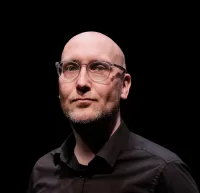
Finnish scholar Jussi Parikka will be our inaugural CIS Visiting Scholar in the winter of 2025. A renowned writer and professor in Digital Aesthetics and Culture at Aarhus University (Denmark), Professor Parikka will give a public lecture at UCR Arts as part of their “Pacific Standard Time – Digital Capture” initiative and he will hold a workshop for UCR students. The scholarship is funded by the office of the Vice Provost for International Affairs at UCR.
More information to follow.
Funded by the Office of the Vice Provost for International Affairs
***
Events
January 11, 2025 | 10am | Operativity and Digital Capture
January 13, 2025 | 10am | Graduate Seminar with Dr. Jussi Parikka
January 13, 2025 | 2pm | Living Surfaces: Images, Plants, and Environments of Media – Book Talk with Jussi Parrika and Gloria Kim
Brink and Elliott Graduate Travel Fellowships 2023
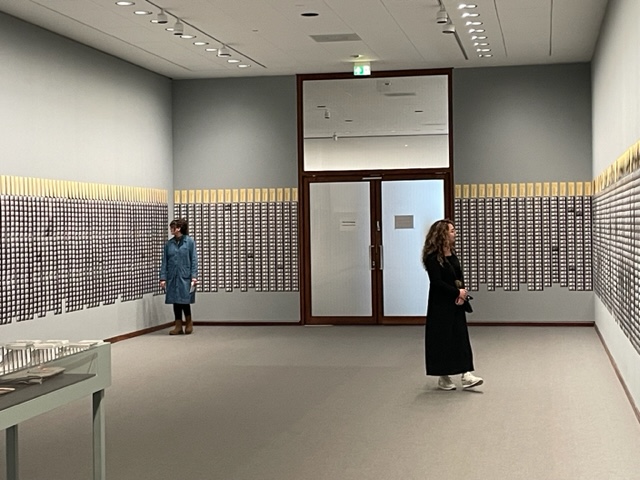
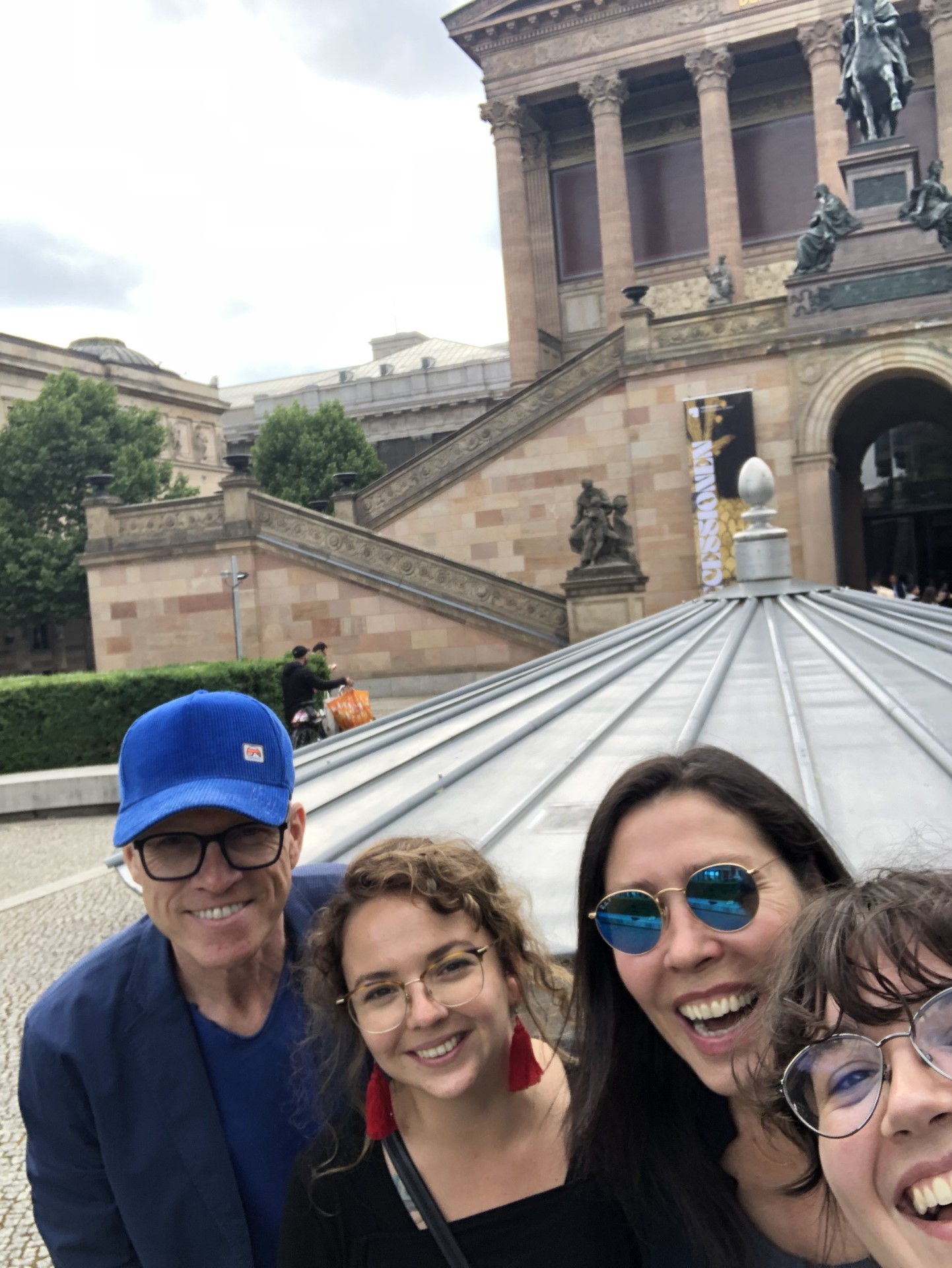
Thanks to the generous support of two donors, Barbara Brink and Georgia Elliott, two graduate students could travel to Berlin in the summer of 2023 to do research for their PhD projects: Sarah Faulk and Mariana Wadsworth. CIS co-director Jeanette Kohl took them on an excursion to museums in Berlin.
Desert Spotlight
With our new office on UCR’s Palm Desert campus, we are intensifying collaborations with the desert communities. A series of lectures on the desert environment and other activities in the making, so stay tuned!
The Joy of Curating: Inside the Getty’s Collection of Sculpture and Decorative Arts
April 6 at 6pm
UCR Palm Desert Center
Highlighting masterpieces of the collection, from objects collected by the institution’s founder to the most recent acquisitions, this talk by Anne-Lise Desmas, Senior Curator of Sculpture and Decorative Arts at the J. Paul Getty Museum in Los Angeles, will offer a glimpse into the curator’s various missions. This program is in collaboration with UCR’s Center for Ideas and Society.
Connecting Colleges
The Center for Ideas and Society’s “Being Human” Initiative and the Office of the Vice Chancellor of Research and Economic Development invite proposals for cross-campus, interdisciplinary mini research labs on the theme of Innovation Through Humanities. This is a continuation of our successful minilabs program in 2021/22.
Funded by the Vice Chancellor for Research and Economic Development
2024 Project:
Good Medicine: Collective Memory, Storywork, and the Arts of Community-Building
Faculty participants:
Donatella Galella
Crystal Baik
Kimberly Guerrero
Charmaine Craig
Emily Hue
Latipa
PI Tamara Ho
In this new collaboration with UCR’s School of Medicine, the CIS hosts a series of lunch conversations among health professionals and thoughtful individuals from other disciplines with perspectives on medicine and society. The lunches are generously sponsored by Dr. Albert Stroberg and co-organized with Dr. David Lo, Associate Dean for Research at the SoM. Transcripts of the discussions will be available on this website.
Upcoming Events
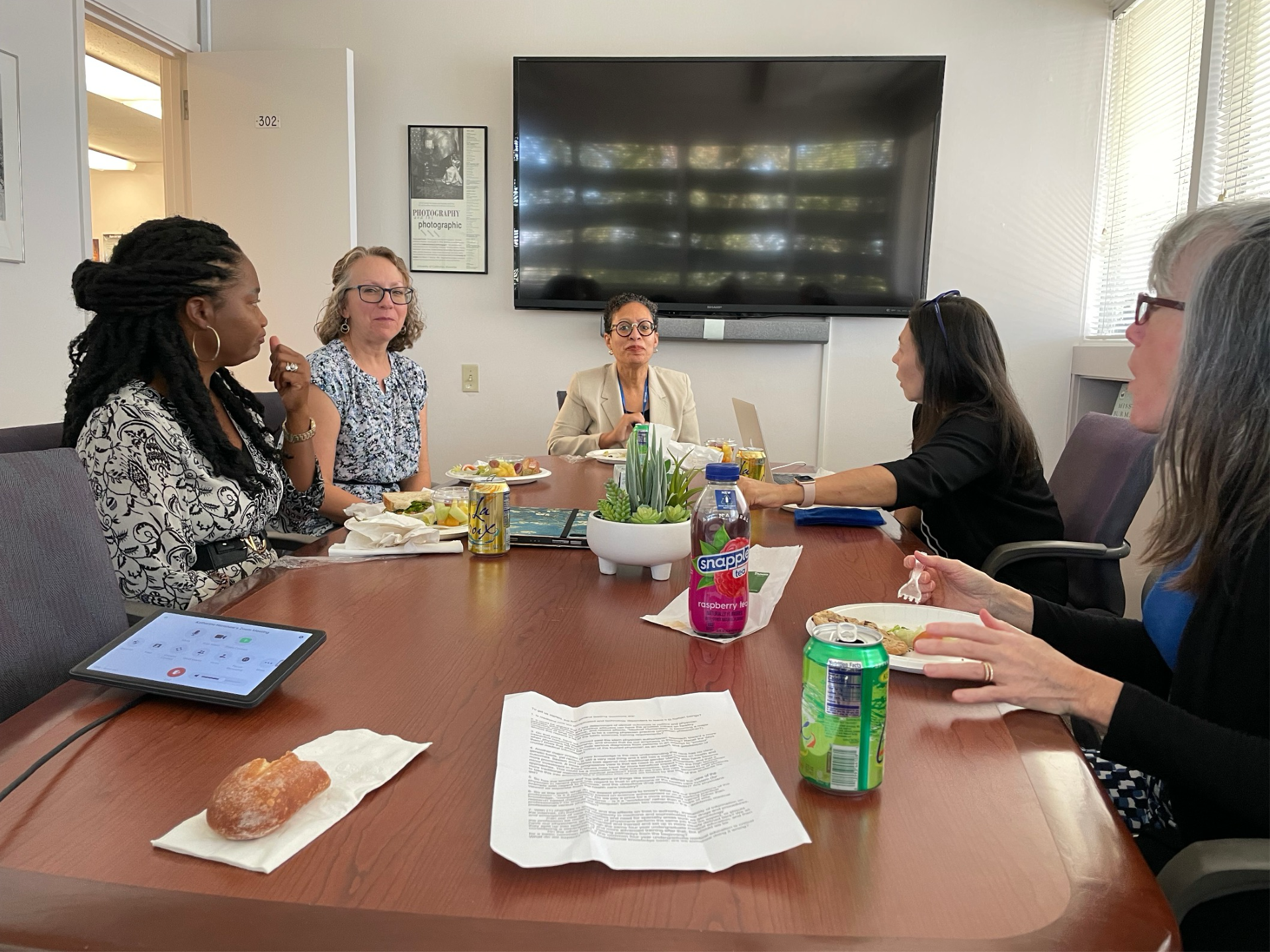
1st Albert Lunch: Just a Job? Medical Education between Science and Practice
Nov. 1, 2023 | Center for Ideas and Society
View Transcript
Participants: Lisa R. Fortuna, Jeanette Kohl, David Lo, Tanya Nieri, Adwoa Osei
Medical education has been steadily reducing basic sciences instruction in favor of clinical skills. In an age of new medical advances, is this the right direction, or are there other paths for the future of our medical students’ education? Should we consider changing the definition of physician?
—
2nd Albert Lunch: Mental Health
April 30, 2024 | 12-1:30pm | CHASS INTS 1111
View Transcript
Participants: David Lo, Bruce Link, Lisa Fortuna, Jeanette Kohl, Dana Simmons, Kalina Michalska
The topic of the second Albert Lunch is Mental Health and Neuroscience: Mental health is widely rated as the top health concern, yet it can be so difficult to define, and even more difficult to treat. We have an entire manual of mental disorders (the DSM-5); each edition reflects the fact that it is constantly being updated. Yet curiously, the entire National Institutes of Health, dedicated to treating all aspects of human health, has no funding priorities or mechanisms tied directly to elements of the DSM-5. That is, the biological aspects of neuroscience developed by countless billions of dollars from the NIH, as well as the institute’s ongoing research priorities, are not organized to match this catalogue of mental disorders. Admittedly, this description is a bit hyperbolic, but it reflects a situation in which society’s definitions of mental health, and the present state of knowledge of how our brains work, are not quite in alignment, and are often not advancing in the same direction. Indeed, here is a world where we can passively accept the idea that people can hold two or more completely incompatible “truths” at the same time.
The pandemic and society’s emergence from the most severe impacts of the shutdowns have also revealed a mental health care delivery system that was already inadequate for the need. The stress of the pandemic pushes a system that is falling even further behind, accompanying related mental health phenomena such as social isolation, fragmentation and polarization of society, and all its destructive effects on social norms. It might be appropriate to ask whether the present status of neuroscience and mental health care delivery needs a re-examination, along with an assessment of how society views mental health.
Being Human Partnering Events
Huntington Library Open House @UCR
October 1, 2025 3pm | The Barn Stable
View Photos
The Huntington Comes to UCR!
Join Huntington Library Director of Research Susan Juster, members of her staff, and Huntington curators for an Open House event at UC Riverside. Juster and her team will share insights into the Huntington’s fellowship program, the application process, and what makes for a strong application.
The Huntington is a word-class research institution, which promotes humanities scholarship on the basis of its library holdings and art collections.
Whether you are a graduate student or a faculty member, please mark your calendar. This is a unique opportunity to learn and connect. An informal reception with drinks and snacks will follow the presentations.
Speaker Series
All talks scheduled for 4:00-5:30pm
Funding from the University of California through the campus Anti-Bias Fund.
Wednesday, November 13: Daniel Ortner (Attorney, the Foundation for Individual Rights and Expression): “The Campus Protests and Issues of Speech.” Location: 1128 CHASS Interdisciplinary Building South
Wednesday, December 4: Prof. Gary Gilbert (Claremont McKenna College): “Messianic Politics in Israel.” Location: 1500 HMNSS
Thursday, January 23: Prof. Robert Pape (University of Chicago): “Student Attitudes about the War and the Campus Protests.” Location: 1500 HMNSS
Thursday, February 13: Judith Shulevitz (Journalist & Culture Critic, The Atlantic Magazine): “What Those Pro-Palestinian Chants Mean.” Location: 1500 HMNSS
Wednesday, April 9: Prof. Dov Waxman (UCLA): “When Is Anti-Zionism Anti-Semitism?” Location: 1500 HMNSS
Wednesday, May 14: Prof. Magda Teter (Fordham University): “The Christian Origins of Anti-Semitism.” Location: 1113 CHASS Interdisciplinary Building South
October 22, 2025 10am | HMNSS 1500
This talk examines the evolving relationship between Big Tech, U.S. intelligence, and transatlantic policy networks in shaping digital infrastructure and online discourse. It explores how the Internet—while serving as a powerful tool for communication and information exchange—has simultaneously been utilized as an instrument of surveillance and narrative control within an emerging system of algorithmic governance.
It will trace the historical roots of these developments, their global implications, and the challenges they pose for democratic communication and digital sovereignty.
Dr. Sathi is an Assistant Professor of Gender and Political Economy at the International Institute of Social Science (ISS) in The Hague, Netherlands. Dr. Sprague is a Research Associate at the Institute for Research on World-Systems, University of California, Riverside.
Should the Left Abandon “Wokeness”?
April 9, 2025 12:30pm | Virtual Event
Vivek Chibber (Professor of Sociology at New York University) and Paul D’Anieri (Professor of Political Science at UC Riverside) will discuss the question: “Should the Left Abandon “Wokeness”?”
This event is cosponsored by UCR CIVIC (Council for Intellectual Values & Inclusive Community) and the Being Human Initiative at the Center for Ideas & Society.
—
The Rise of Political Violence in the United States – And the Role of Universities
March 6, 2025 4pm | Virtual event
On Thursday, March 6, CIVIC will host the University of Chicago Political Scientist Robert Pape.
Prof. Pape is a leading authority on political violence in the U.S. and internationally. He will address trends in political violence in the United States and the past and potential future role of universities as sites for political violence.
—
Should Universities Maintain Institutional Neutrality on Political and Social Issues: A Debate
January 15, 2025 12:30pm | CHASS INTS 1128
Two leading figures will debate the advisability of institutional neutrality. Kristina Daugurdas (University of Michigan Law School) will argue the pro side. John K. Wilson (American Association of University Professors) will argue the con side.
February 9, 2025 4:30pm | Virtual Event
Register: https://bit.ly/UCR_Iran
The Decolonizing Humanism(?) and Being Human Initiatives at the Center for Ideas & Society, the Middle Eastern and Islamic Studies program and the department of History at UCR present:
Recent Protests and the Current Crisis in Iran: Is this the End?
An online panel discussion with:
Reza Aslan, UCR
Sholeh Wolpé, UCI
Afshin Matin-Asgari, Cal State University, LA
Fariba Zarinebaf, UCR (moderator)
Dr. Reza Aslan (Creative Writing) is a renowned writer, commentator, professor, Emmy- and Peabody-nominated producer, and scholar of religions. A recipient of the prestigious James Joyce award, Aslan is the author of numerous internationally best-selling books, including the #1 New York Times Bestseller, Zealot: The Life and Times of Jesus of Nazareth. His biography of Howard Baskerville, An American Martyr in Persia, was nominated for the PEN/Jacqueline Beograd Weld Award.
Sholeh Wolpé is a poet, writer, and librettist whose body of work spans seven collections of poetry, several plays, five books of translations and three anthologies, as well as texts and librettos for the choir and opera. Her most recent books are: The Invisible Sun – Attar (Harper Collins), and Abacus of Loss – A Memoir in Verse (Univ. of Arkansas Press). She is the Writer-In-Residence at the University of California, Irvine.
Afshin Matin-asgari is professor of Middle East History at California State University, Los Angeles and author of more than thirty articles/book chapters and three books on modern Iran’s political and intellectual history. His latest book is Axis of Empire: A History Iran US relations (Verso, 2026).
Fariba Zarinebaf is a professor of Middle East History at UCR. She works on the history of early modern Istanbul and has published several articles on comparative study of Constitutionalism in Iran and the late Ottoman empire. Among her publications are Crime and Punishment in Eighteenth Century Istanbul and Mediterranean Encounters, Trade and Pluralism in Early Modern Galata
Upcoming Events
–
Past Events
–
Director’s Blog
–
Director’s Musings
By Jeanette Kohl Dear colleagues and friends of the CIS, As we all find ourselves in the midst of the fall quarter already, I write to you with some updates and good news from the Center. I am happy to announce three new initiatives in the Being Human event stream, all of which are part of our efforts to create a robust cross-disciplinary discussion platform, emphasize the role of the Arts and Humanities in our university, and increase international exchange. Thanks to the continued support of Rodolfo Torres, VC for Research and Economic Development, we will launch a second round of our successful mini labs, under the theme of Innovation Through Humanities. MiniLabs.02 supports experimental collaborations and cross-campus conversations with an interest in Humanities as a motor for innovation and problem-solving. The program provides opportunities for interdisciplinary brainstorming between faculty across different schools, with the potential for [...]
Postcard from Hamburg
Dear colleagues and friends of the CIS, I hope you have all had a good start into the new academic year! My CIS letter today comes from Germany, where I am in residency at the Institute for Advanced Study in Hamburg (HIAS) until June 2023. It is a trip down memory lane for me. My mother and her family are from Hamburg, and as a child I spent many summers here and on the beaches of the nearby North Sea. I thought I’d share some impressions from where I am with you. The “Free and Hanseatic City of Hamburg” is the second largest city in Germany with almost 2 million people. It is a wealthy town with a long history as the main trading hub of the “Hanse,” a powerful alliance of harbor towns that dominated the foreign trade in the North of Germany from the 12th [...]